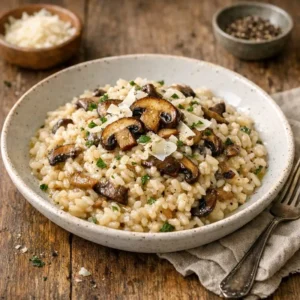
Classic Mushroom Risotto is a creamy, deeply savory Italian rice dish that comes together in about 40 minutes on a single stovetop. It suits weeknight dinners and dinner party tables equally well — and once you understand the technique, it’s genuinely hard to mess up.

- 1½ cups Arborio rice
- 1 lb cremini mushrooms, sliced
- ½ oz dried porcini mushrooms, soaked in 1 cup hot water for 20 minutes (optional but recommended)
- 5–6 cups low-sodium chicken or vegetable broth, kept warm
- 1 medium yellow onion, finely diced
- 4 garlic cloves, minced
- ½ cup dry white wine (such as Pinot Grigio or Sauvignon Blanc)
- 3 tablespoons unsalted butter, divided (2 tablespoons for sautéing, 1 tablespoon cold for finishing)
- 2 tablespoons olive oil, divided
- ¾ cup freshly grated Parmesan cheese
- 1 teaspoon fresh thyme leaves (or ½ teaspoon dried thyme)
- Salt and freshly ground black pepper, to taste
- Fresh parsley, chopped, for serving
- If using dried porcini mushrooms, place them in a small bowl and cover with 1 cup of hot water. Soak for 20 minutes, then lift them out, chop roughly, and strain the soaking liquid through a fine mesh sieve to remove any grit. Set the strained liquid aside.
- Pour the broth into a medium saucepan over low heat and add the strained porcini soaking liquid if using. Keep the broth just below a simmer throughout the entire cooking process — never add cold broth to risotto.
- Heat 1 tablespoon of olive oil in a large wide skillet or Dutch oven over medium-high heat until shimmering. Add the cremini mushrooms in a single layer — work in two batches if needed to avoid crowding. Season with salt and cook undisturbed for 2–3 minutes until deep golden-brown edges form. Flip and cook another 2 minutes. Remove the mushrooms and set aside.
- Reduce heat to medium. Add the remaining 1 tablespoon of olive oil and 2 tablespoons of butter to the same pan. Add the diced onion and a pinch of salt. Cook, stirring occasionally, for 5–6 minutes until soft and translucent but not browned.
- Add the minced garlic and thyme and cook for 1 more minute, stirring, until fragrant.
- Add the Arborio rice to the pan and stir to coat each grain in the butter and oil. Cook for 1–2 minutes until the edges of the grains turn slightly translucent and you smell a faint nuttiness.
- Pour in the white wine and stir continuously until it is fully absorbed, about 1–2 minutes. The pan will sizzle and the wine aroma will fill the kitchen.
- Add one ladleful of warm broth (about ½ cup) to the rice and stir gently and frequently until it is nearly fully absorbed. Add another ladle and repeat, maintaining a relaxed steady stir every 20–30 seconds. Continue this process for 18–22 minutes, adding broth one ladle at a time.
- Begin tasting the rice after 18 minutes. It should be al dente — tender with a very slight resistance at the center. When you pull a spoon through the risotto it should slowly flow back (all’onda). If still chalky in the center, add another ladle of broth and continue.
- Turn off the heat. Stir in the reserved seared mushrooms (and the chopped rehydrated porcini if using). Add the remaining 1 tablespoon of cold butter and the grated Parmesan and stir vigorously for about 1 minute until the butter emulsifies and the risotto looks silky and glossy.
- Season generously with salt and freshly ground black pepper. Let the risotto rest for 1 minute, then plate immediately and top with fresh parsley, an extra grating of Parmesan, and a drizzle of good olive oil if desired. Serve right away.
The secret is patience, not skill. You build flavor in layers — toasted aromatics, deeply browned mushrooms, white wine, and slow additions of warm broth — until the starch in the Arborio rice blooms into something silky and luxurious. The finished dish is pale gold and glossy, with mushroom pieces that are tender but never waterlogged, and a scent of Parmesan and thyme that fills the kitchen from across the room. It’s the kind of bowl that feels indulgent without requiring a culinary degree or a full afternoon.
This version keeps things budget-friendly by leaning on cremini mushrooms (earthy, affordable, and deeply flavorful when properly browned) with an optional handful of dried porcini to push the umami even further. The technique here is non-negotiable: dry mushrooms in a hot pan, warm broth added gradually, and butter stirred in off the heat. Those three things make all the difference.
Why You’ll Love This Mushroom Risotto Recipe
- One pan, manageable technique. You need a wide, heavy-bottomed pan or Dutch oven and about 40 minutes of mostly active (but very relaxing) stirring.
- Budget-friendly ingredients. Cremini mushrooms, Arborio rice, onion, and Parmesan are all affordable staples. A big batch feeds four for well under $15.
- Endlessly adaptable. Add chicken, stir in spinach, swap the mushrooms for roasted butternut squash, or top with a fried egg. The base recipe is a canvas.
- Vegetarian and naturally gluten-free. No substitutions needed — just use vegetable broth and it’s completely plant-based (minus the Parmesan, which is easy to swap).
- Impressive enough for company. Risotto has a reputation for being restaurant food, which means bringing it to a dinner table earns outsized praise for the effort involved.
What You’ll Need
These quantities serve 4 as a main or 6 as a side. The ingredient list is short — quality matters more than variety here.
- 1½ cups Arborio rice — Don’t substitute long-grain or jasmine rice. Arborio has a high amylopectin starch content that dissolves gradually into the cooking liquid, creating that signature creaminess. Carnaroli is an excellent (slightly pricier) upgrade.
- 1 lb cremini mushrooms, sliced — Also called baby bella mushrooms. They’re meatier and more flavorful than white button mushrooms. If you can find a mix of cremini and shiitake, use it.
- ½ oz dried porcini mushrooms (optional but recommended) — Soak them in 1 cup of hot water for 20 minutes. Add the soaking liquid (strained) to your broth for an incredible depth of flavor. Dried porcini are sold in most grocery stores near the pasta.
- 5–6 cups low-sodium chicken or vegetable broth — It needs to be warm when it goes into the rice. Cold broth shocks the starch and slows the cooking process. Keep it in a saucepan over low heat the whole time.
- 1 medium yellow onion, finely diced — Fine dice means it melts into the risotto rather than announcing itself in bites.
- 4 garlic cloves, minced
- ½ cup dry white wine — Pinot Grigio, Sauvignon Blanc, or any dry white you’d actually drink. It deglazes the pan and adds brightness. If you’d rather skip it, add an extra ½ cup of broth and a squeeze of lemon at the end.
- 3 tablespoons unsalted butter, divided — Two tablespoons go in at the start for sautéing; one tablespoon is stirred in cold off the heat (called mantecatura) to give the risotto its final gloss.
- 2 tablespoons olive oil
- ¾ cup freshly grated Parmesan cheese — Buy a wedge and grate it yourself. Pre-shredded Parmesan has anti-caking agents that prevent it from melting smoothly.
- 1 teaspoon fresh thyme leaves (or ½ tsp dried)
- Salt and freshly ground black pepper
- Fresh parsley, to finish
How to Make Classic Mushroom Risotto
Read through these steps once before you start. Risotto is a rhythm, not a recipe you can step away from — but it’s a genuinely enjoyable rhythm once you’re in it.
- Warm the broth. Pour the chicken or vegetable broth into a medium saucepan over low heat. If you’re using dried porcini, add the strained soaking liquid now. Keep the broth just below a simmer. This is non-negotiable — always add warm liquid to risotto.
- Sear the mushrooms first, separately. Heat 1 tablespoon of olive oil in a large, wide skillet or Dutch oven over medium-high heat until shimmering. Add the cremini mushrooms in a single layer — don’t crowd them. Season with salt and don’t stir for 2–3 minutes. You want deep golden-brown edges, not steamed, pale mushrooms. Flip and cook another 2 minutes. Remove and set aside. This step is critical: mushrooms are 90% water, and crowding causes them to steam instead of sear. Work in two batches if needed.
- Soften the aromatics. Reduce heat to medium. Add the remaining tablespoon of olive oil and 2 tablespoons of butter to the same pan. Add the diced onion and a pinch of salt. Cook, stirring occasionally, for 5–6 minutes until soft and translucent — not browned. Add the garlic and thyme and cook for 1 more minute until fragrant.
- Toast the rice. Add the Arborio rice directly to the pan. Stir to coat each grain in the butter and oil and cook for 1–2 minutes until the edges of the grains turn slightly translucent and you can smell a faint nuttiness. Toasting the rice creates a starchy outer shell that slows absorption and helps the grains cook evenly without turning mushy.
- Add the wine. Pour in the white wine and stir continuously until it’s fully absorbed, about 1–2 minutes. The pan will sizzle and the wine will smell incredible. This step deglazes any browned bits from the bottom and adds a subtle acidity that balances the richness.
- Add broth, one ladle at a time. Add one ladleful of warm broth (about ½ cup) to the rice and stir gently and frequently until it’s nearly fully absorbed. Add another ladle. Repeat. This process takes 18–22 minutes. You don’t have to stir constantly like a machine — a relaxed, steady stir every 20–30 seconds is enough. What you’re doing is coaxing the starch out of the rice gradually; too much liquid at once means the starch washes away into the cooking liquid instead of making the risotto creamy.
- Test for doneness. Start tasting after about 18 minutes. The rice should be al dente — tender but with a very slight resistance at the center, like perfectly cooked pasta. If it’s still chalky or hard in the middle, add another ladle and keep going. When you pull a spoon through the risotto, it should slowly flow back and settle — this is called all’onda (wave-like) in Italian, and it’s the visual cue that your consistency is right.
- Finish with butter and Parmesan. Turn off the heat. Stir in the seared mushrooms. Add the remaining 1 tablespoon of cold butter and the grated Parmesan and stir vigorously for about 1 minute. The cold butter emulsifies into the starchy liquid and gives the risotto its final silky sheen. Season generously with salt and black pepper.
- Rest and serve immediately. Let the risotto sit for 1 minute, then plate and top with fresh parsley, an extra grating of Parmesan, and a drizzle of good olive oil if you have it. Risotto waits for no one — serve it right away.
Tips, Variations & Serving Ideas
Make It Even More Flavorful
The dried porcini soaking trick is the single biggest upgrade you can make to a budget mushroom risotto recipe. The soaking liquid is essentially free mushroom stock — deeply earthy, almost meaty. Strain it through a fine mesh sieve or paper towel to catch any grit before adding it to your broth.
Add-In Ideas
- Wilted spinach or kale: Stir in a couple of handfuls of baby spinach right at the end with the Parmesan. The residual heat wilts it perfectly.
- Truffle oil: A tiny drizzle (less than ½ teaspoon) over the finished bowl adds a luxurious aroma. Don’t cook with it — heat kills the delicate flavor.
- Crispy prosciutto: Lay thin slices on a baking sheet and bake at 400°F for 8–10 minutes until shatteringly crisp. Crumble over the top right before serving.
- Lemon zest: Half a teaspoon of fresh lemon zest stirred in at the finish brightens the whole dish and cuts through the richness beautifully.
If you enjoy Italian-inspired rice dishes, you’ll also love creamy butternut squash risotto, which uses a similar technique with a sweeter, autumn-forward profile.
Storing and Reheating
Risotto is best eaten fresh, but leftovers keep in the refrigerator for up to 3 days. It will firm up considerably as it cools — that’s normal. To reheat, add a splash of broth or water (2–3 tablespoons per cup of risotto) to a small saucepan over medium-low heat and stir until loosened and hot. Don’t microwave it dry or it’ll turn gluey and clumpy. You can also repurpose leftover risotto into arancini — form cold risotto into balls, stuff with a small cube of mozzarella, dredge in breadcrumbs, and pan-fry until golden.
Make-Ahead Tips
Risotto doesn’t hold well once fully finished, but you can par-cook it. Follow the recipe through step 6, cooking it about 75% of the way through (the rice should still be quite al dente and the mixture fairly thick). Spread it on a sheet pan to cool, then refrigerate. When you’re ready to serve, reheat the par-cooked risotto in your pan, pick up with the warm broth additions, and finish as directed. This is exactly how restaurant kitchens handle it.

Pair this mushroom risotto with a simple green salad and crusty bread, or serve it alongside garlic parmesan roasted broccoli for a fully vegetarian dinner that feels genuinely satisfying.
Wine Pairing
Since you’re opening a bottle for the recipe anyway, pour yourself a glass of the same dry white wine. A light-bodied Pinot Noir also works beautifully with the earthiness of the mushrooms if you prefer red.
Common Mistakes & Fixes
Mistake 1: Adding cold broth
What happens: Cold liquid shocks the rice, causing the outer starch to seize up. The grains cook unevenly — some mushy on the outside, still raw inside — and the whole process takes longer.
Fix: Always keep your broth in a saucepan on the adjacent burner, over low heat. It doesn’t need to boil, just stay warm.
Mistake 2: Walking away from the pan
What happens: Risotto left unattended absorbs too much liquid in one go, the starch settles to the bottom, and the rice scorches.
Fix: Stay close. You don’t need to stir every second, but check and stir every 20–30 seconds. Think of it as 20 minutes of active, meditative cooking rather than a chore.
Mistake 3: Crowding the mushrooms
What happens: Too many mushrooms in the pan at once drop the temperature. Instead of searing, they steam and release their water, turning pale and limp with no flavor development.
Fix: Cook mushrooms in a single, uncrowded layer over medium-high heat. Work in two batches. Don’t stir for the first 2–3 minutes — let them sit undisturbed so a crust can form.
Mistake 4: Adding Parmesan while the heat is on
What happens: High heat causes the protein in the cheese to seize and become grainy rather than melting smoothly into the rice.
Fix: Turn the heat off completely before stirring in the butter and Parmesan. The residual heat is plenty to melt everything and create that glossy, restaurant-worthy finish.
Mistake 5: Overcooking until it’s stiff
What happens: Risotto that sits on the heat too long (or gets cooked too dry) loses its creamy, flowing consistency and becomes a dense, sticky mass.
Fix: Pull the pan off heat when the risotto is still slightly looser than you want it. It will continue thickening as it rests and as the starch absorbs any remaining liquid. Err on the side of slightly saucy rather than stiff.
For another cozy, warming dinner that uses a similar patient technique, try creamy mushroom stroganoff — it’s another great way to make mushrooms the star of the plate.
You May Also Like



Frequently Asked Questions About Classic Mushroom Risotto
Do you have to use Arborio rice for risotto?
Arborio is the most widely available choice and works beautifully here. Carnaroli and Vialone Nano are traditional Italian varieties that many chefs prefer — they hold their shape a little better and produce an even creamier result. What you can’t do is substitute regular long-grain rice, jasmine, or basmati. Those varieties don’t have the right starch structure and will turn to mush before they ever get creamy.

Can I make mushroom risotto without wine?
Absolutely. The wine adds brightness and helps deglaze the pan, but it’s not essential. Substitute an equal amount of additional warm broth and add a teaspoon of white wine vinegar or a good squeeze of fresh lemon juice at the very end to replicate that acidity. The risotto will still be delicious.
How do I know when the risotto is done?
Taste it. The rice should be tender all the way through but with the faintest bite at the very center — not chalky, not mushy. The texture of the whole pot should be loose and flowing (what Italians call all’onda, or wave-like) when you shake the pan. If you drag a spoon through it and it slowly settles back, you’re there. If it stays put like dry paste, add one more ladle of broth.
Is mushroom risotto vegetarian?
It is, as long as you use vegetable broth instead of chicken broth. Traditional Parmesan (Parmigiano-Reggiano) is technically made with animal rennet, so strict vegetarians should use a vegetarian hard cheese labeled as such — most grocery stores carry them. The rest of the recipe is entirely plant-based.
Can I freeze mushroom risotto?
Technically yes, but it’s not ideal. The starch structure breaks down during freezing and the texture turns grainy and gluey when reheated. If you want to meal-prep, the par-cook method described in the make-ahead tips above is a much better option. Leftovers also repurpose beautifully as arancini (fried risotto balls), which actually freeze and reheat quite well once formed and coated.
This mushroom risotto recipe also pairs perfectly with roasted garlic tomato soup as a starter if you’re building a full dinner menu — both are vegetarian, both are deeply comforting, and the contrast of textures works wonderfully together.
Ready to Make It?
This classic mushroom risotto is one of those dishes that rewards the cook every time. It’s not fussy — it just asks you to stay present for 40 minutes, and in return it gives you something genuinely beautiful: a bowl of glossy, Parmesan-scented, mushroom-studded rice that tastes like you ordered it somewhere expensive. You didn’t. You made it at home, on a weeknight, for the cost of a fast food run.
Give it a try this week. If you have questions about the technique or want to share what you added to yours, drop a comment below — it’s always helpful to hear how other cooks make a recipe their own. And if you’re saving this for later, pin it so it’s easy to find when mushroom risotto night rolls around.
Note: photos on this site are AI-generated illustrations of the finished dish. Recipes are developed from established cooking techniques; adjust seasoning and doneness to taste.